Tirzepatide Mechanism of Action: The GLP-1 Gut Hormone
How does the Tirzepatide mechanism of action affect you?
Tirzepatide is one shot that acts like two hormones made in your gut, and this page explains how those actions, called GIP and GLP-1, affect insulin, hunger, the stomach, blood sugar, and weight. Both tell the pancreas to put insulin into the blood while the sugar in your blood runs high. GLP-1 also helps curb hunger and slow the stomach. Tirzepatide adds GIP to the GLP-1 action. This means GLP-1 isn't working alone. “Mechanism of action” is simply the medical term for how a drug works.
Built as a 39-amino-acid peptide, tirzepatide is a short protein chain. Amino acids are the small parts used to make proteins. A small fat piece helps the drug remain in your blood for about five days. That's what makes one shot each week possible. You don't need more lab terms to understand the human results.
Why do cells respond more to one Tirzepatide action?
Willard and his team ran tirzepatide cell tests in 2020 [2]. The cells responded more strongly to GIP than to GLP-1. Scientists once thought both actions might need equal force. These tests found that an uneven response could still lead cells to release insulin.
The tests found one more detail. Tirzepatide kept the cells ready to release insulin for longer. In groups of insulin-making cells, the response to GLP-1 faded sooner. The response to GIP or tirzepatide didn't fade in the same way [2].
In 2024, Douros and his team reviewed this work [9]. They thought the longer response might help explain greater insulin release and weight loss. That's an idea from cells, not proof from people.
In 2021, Novikoff and his team watched living cells [4]. The cells stayed ready to release insulin. Their hormone-sensing parts also stayed at the cell surface longer. Again, no person took part. These findings can't tell you how much insulin your pancreas will release or how you will feel.
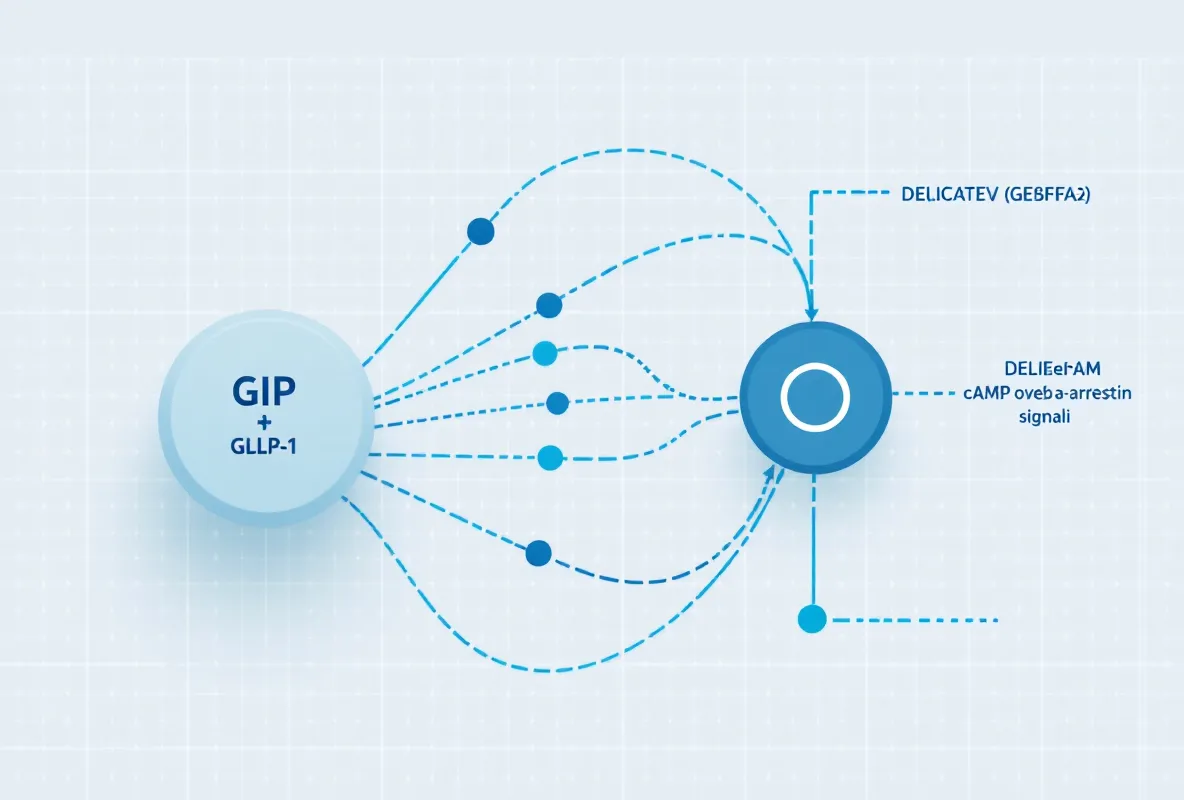
How can Tirzepatide act like both gut hormones?
In 2022, Sun and his team used a powerful microscope. They saw tirzepatide grip the cell parts that sense both gut hormones [7]. This fit explains how one man-made chain can start both cell responses. The image can't predict your benefit or your risk.
The chain has 39 amino acids and is based on GIP. One end fits the part that senses GIP. Other parts help it fit the part that senses GLP-1. This second fit starts the GLP-1 response. The small fat piece doesn't help that fit. It helps tirzepatide cling to albumin, a protein in blood. Natural gut hormones last only minutes. Tirzepatide lasts about five days [1].
What might GIP add beyond GLP-1?
The action tied to GIP may add changes beyond GLP-1. Scientists have tested fat cells and reviewed brain work to find out.
In 2024, Regmi and his team tested human fat cells in a dish [8]. After food, when insulin was high, the cells took in more sugar and fat. Between meals, when insulin was low, they released stored fat. This may help the body handle fats in the blood. No people took part, so the test can't say how much weight anyone would lose.
In 2025, Samms and his team reviewed past brain work [40]. They proposed that GIP may curb hunger through brain cells not reached by GLP-1. It might also ease nausea. No human trial has proved either cause.
In 2025, another Samms review looked across work on the gut, brain, and fat cells [9]. It said drugs that copy several gut hormones may lower food intake and help cells release stored fat. The review didn't test new people. These are leads for more research, not promises. They may explain lower blood fats, but they can't tell you what caused one person's weight change.
Do the cell findings match Tirzepatide trials?
The first cell and mouse work suggested that copying both hormones might beat copying GLP-1 alone [1]. Later, SURPASS-2 and SURMOUNT-5 tested people. Tirzepatide produced larger blood sugar and weight drops than semaglutide, another weekly shot [3][6]. The trials tell us what changed. They can't show which cell action caused each part.
Both hormone actions help the pancreas put insulin into the blood mainly while the sugar in your blood runs high. That helps explain why tirzepatide alone seldom causes very low blood sugar [21]. Other diabetes drugs can raise that risk.
Tirzepatide also lowers glucagon, a hormone that raises blood sugar. It slows the stomach, so food reaches the bowel later. In a Phase 1 study, an early human test, Urva and his team found that first slowing [28]. More insulin, less glucagon, slower stomach emptying, and less hunger can all help lower blood sugar and weight.
The Phase 1 test gave the first human finding. Cell work may explain the three-month blood sugar change, but human trials deserve more trust. Your own result may differ.